
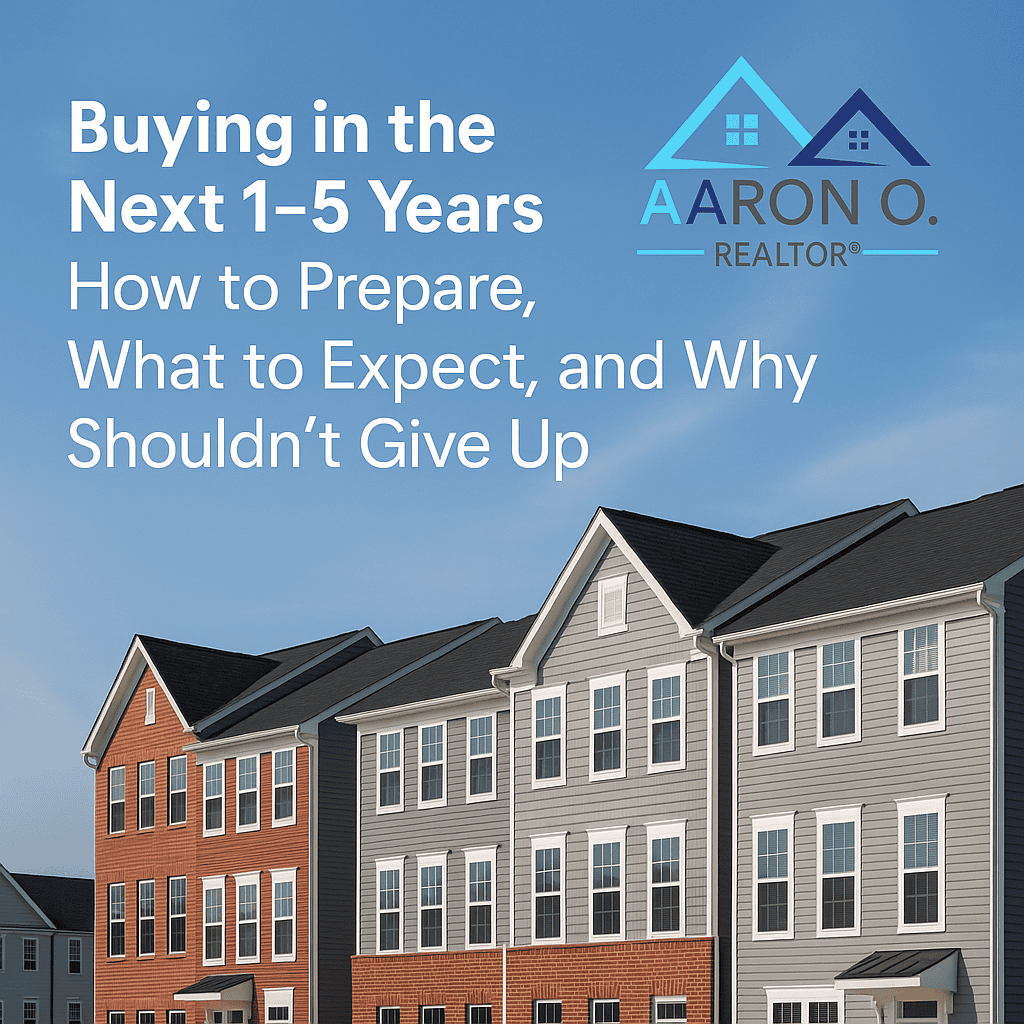
Buying in the Next 1–5 Years: How to
Prepare, What to Expect, and Why You
Shouldn’t Give Up
So, you're thinking about buying a home—maybe in Waldorf, California, MD, or Prince Frederick, or perhaps in a fast-growing Northern Virginia suburb like Woodbridge, Lorton, or Dumfries. Whether it’s a new construction townhome, a move-in-ready colonial, or a fixer-upper you want to build equity in, the goal is clear: stop paying someone else’s mortgage and start building your own future. The good news? You can absolutely become a homeowner within the next five years—if you take action with clarity and strategy. Yes, the market is competitive, but well-prepared buyers are still winning.
Why Buying in 2025 Feels So Hard
You've probably heard someone say, “It was easier when I bought my first house.” They’re not wrong. According to Business Insider, mortgage rates in 2025 are averaging around 6.76%—more than double what they were in 2020. That means higher monthly payments and tighter budgets.
At the same time, the national median home price is about $412,000, and the New York Post reports it now takes the average American 10 full workdays a month just to cover a mortgage. In many DMV-adjacent areas, prices are even higher. The gap between renters and buyers continues to widen—and that means it’s not enough to hope your way into a home. You need a plan.
What It Really Takes to Qualify (DESC)
To become a homeowner, lenders look for four key things: Debt, Employment, Savings, and Credit.
1. Debt
Your debt-to-income ratio (DTI) tells lenders how much of your income goes toward existing obligations. Most want to see this under 33%, though some will allow up to 43% if other factors are strong.
Reducing debt boosts your loan eligibility and improves your interest rate. Use budgeting tools like Mint or NerdWallet to calculate your DTI and build a payoff plan.
2. Employment
You don’t need to be at the same job for two years, but consistency is key. Most lenders want to see two years in the same industry, with documented, reliable income.
If you’re self-employed or 1099, you’ll need two years of tax returns. Lenders focus on whether your income is likely to continue, so make sure your
finances are well-documented
3. Savings
Aim to save at least 5% of the home price. For a $400,000 property, that means having $20,000 available to cover your down payment, closing costs, or reserves.
Even if you qualify for a zero-down loan, having savings gives you options and leverage in a competitive market. Store your funds in a high-yield savings account to earn while you wait.
4. Credit: Your Score Is Your Leverage
Lenders typically require a minimum credit score of 620, but a score of 680 or higher unlocks better rates, lower costs, and more flexibility.
Most mortgage lenders use FICO Score versions 2, 4, and 5—very different from the scores on Credit Karma or your bank’s app. Use MyFICO.com to see the real scores that matter.
If your score needs work, get proactive. Clean up late payments, reduce utilization, and dispute errors. Many lenders also offer complimentary credit
coaching as part of their preapproval process. Reach out; I can connect you to my leaders who oer these services.
Your One to Five-Year Action Plan
If you’re not quite ready to buy today, that’s okay. Your job right now is to get positioned. Here's where to start:
Increase Your Income
Whether it’s a raise, side gig, or a career pivot, more income equals more buying power. Even a $500 monthly increase can significantly expand your loan limit.
Clean Up Your Credit
Eliminate high-interest debt, avoid late payments, and monitor your score using tools like Experian or myFICO. Aim to stay below 30% utilization on all credit lines.
Cut Down Debt
Reducing monthly liabilities improves your debt-to-income (DTI) and boosts your approval amount. Even paying off one car loan or large credit card
balance can move the needle in your favor.
Save Smarter
Set up automatic transfers into a separate savings account. Consistency is key.
Where and What to Buy in Southern Maryland & Northern Virginia
For first-time buyers, new construction townhomes are a smart, accessible option. They’re typically more affordable than single-family homes, oer
energy-efficient designs, and come with builder incentives like closing cost help and interest rate buy-downs.
Top regional builders—Ryan Homes, DRB, Lennar, and Dream Finders Homes—oer modern layouts and community perks like parks, trails, and
low-maintenance living.
In Southern Maryland, focus on areas like Waldorf, White Plains (St. Charles), Prince Frederick, and across St. Mary’s County, including California, Lexington Park, and Great Mills. These markets oer solid growth potential, commuter access, and affordability.
In Northern Virginia, check out Woodbridge, Lorton, and Dumfries—all experiencing strong builder activity and ideal for entry-level buyers.
New builds help reduce maintenance risk, while offering competitive loan options and long-term value.
Best Mortgage Options
- FHA Loans: 3.5% down, flexible credit requirements
- USDA Loans: 0% down in eligible rural zones (many in Calvert County)
- VA Loans: 0% down for eligible military borrowers
- Maryland Mortgage Program & Virginia Housing: Grants, education, and down payment assistance for first-time buyers
Local Markets to Watch
- California, MD: Affordable with strong military employment and growing demand
- Waldorf, MD: Rapid development, commuter-friendly to DC
- Prince Frederick, Dunkirk, Owings: Calvert County charm with suburban convenience
- Woodbridge, VA: Excellent access to transit and shopping
- Dumfries & Lorton, VA: Emerging value and inventory for townhome buyers
You Don’t Have to Do It Alone
You don’t need to be married to buy a home. Co-buying with a friend, sibling, or partner is increasingly common—and it works.
If both buyers have stable income, decent credit, and manageable debt, you can qualify together and aord more than you could individually. Just be sure to create a co-ownership agreement to protect everyone involved.
Try House Hacking
One of the smartest ways to reduce your housing cost is house hacking. Buy a home with a rentable basement, guest suite, or duplex setup. Live in one unit, rent the other, and let that income cover part—or all—of your mortgage.
In areas like Waldorf or Woodbridge, this can be the difference between barely qualifying and comfortably owning.
Shift Your Mindset: From Consumer to Investor
If homeownership is your goal, start making choices today that reflect the future you want to build.
Most people live paycheck to paycheck because they think like consumers. They treat themselves, finance liabilities, and delay discipline. But successful homeowners think like investors.
That doesn’t mean cutting all joy—it means aligning your spending with your goals. If you spend $400/month on extras, redirect even half toward savings or credit improvement. That’s $2,400 a year—and it adds up fast.
You don’t need to be rich. You need to be intentional. Owning a home starts with owning your choices.
Yes, It’s Harder—But That’s Why It’s Worth It
Buying a home in 2025 isn’t easy. Prices are up. Requirements are tighter. But here’s what hasn’t changed: homeownership remains the most proven path to long-term wealth.
Renters build their landlord’s equity. Homeowners build their own. Each mortgage payment increases your net worth. According to the Federal
Reserve, the average homeowner has 40 times more wealth than the average renter. Why? Because ownership compounds. Every month, you're paying yourself through equity and future appreciation.
Meanwhile, renters face rising costs and zero return.
Real estate isn’t just a place to live—it’s a financial engine. And yes, it requires effort. But that’s why it pays o. Because you’re not just buying a home—you’re buying a future with options, security, and legacy.
Ready to Take the First Step?
You don’t have to do this alone. Whether you're 12 months out or five years away, I’ll help you create a personalized plan based on your income, goals, and timeline.
Start your journey here:
👉 https://theaarono.com/buyers/getting-started
Let’s map out your path to homeownership in Maryland or Virginia—and turn your “someday” into a done deal.
Connect